The True North EHS, Issue #8

Prefer to listen? Here is the audio companion for this issue.
July 2026 | Practical safety insight for real-world operations
Lead Story: Don’t Be a Hero for the Company. Be Here for Your Family.
Every day, people make decisions at work that feel small in the moment.
Skip the PPE this one time.
Take the shortcut.
Do it the faster way instead of the safer way.
Push through the risk because nobody is around.
Ignore that uneasy feeling because production needs to keep moving.
Most people do not make those choices because they want to get hurt. They make them because they want to help. They want to be dependable. They want to be productive. They want to be the one the company can count on.
They want to be a hero for the company.
But that is the wrong place to be a hero.
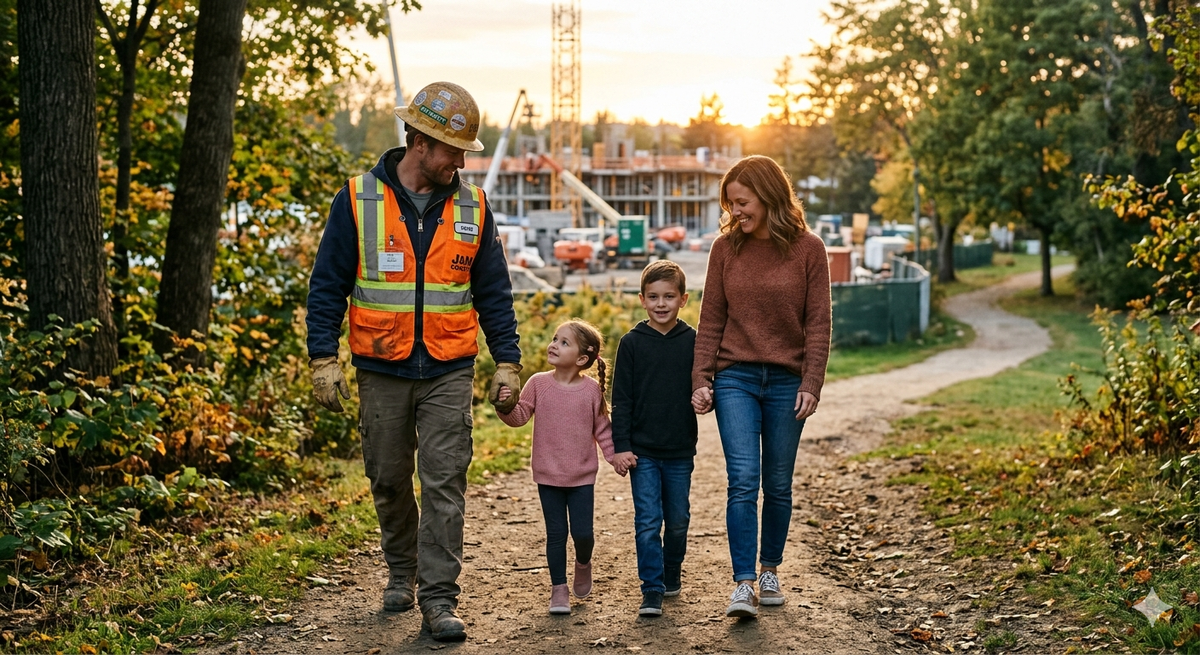
Be here for your family.
The company will move on. Your family will not.
That may sound harsh, but it is true.
If you get hurt badly enough, the company will respond, investigate, adjust, and keep going. That is what companies do. The work will continue. The meetings will continue. The numbers will continue. And eventually, the role will be filled.
But your family does not just keep going like that.
Your wife feels it. Your husband feels it. Your kids feel it. Your mom and dad feel it. Your brother feels it. Your sister feels it.
And if the worst happens, they do not just lose a worker. They lose you.
They lose your voice in the house.
They lose your seat at the dinner table.
They lose your laugh on the holidays.
They lose your presence at birthdays, weddings, anniversaries, graduations, vacations, and ordinary nights that never felt important until you were not there for them anymore.
There will be an empty chair.
And no company on earth can fill that chair.
Too many shortcuts are disguised as dedication
This is what makes unsafe behavior so dangerous.
A shortcut can look like commitment.
Risk can look like toughness.
Skipping a step can look like efficiency.
Working without PPE can look like confidence.
Pushing through a hazard can look like loyalty.
But it is not loyalty.
It is exposure.
And too many people have been praised for behavior that had no business being praised in the first place.
The employee who takes the risk is often called tough.
The employee who stops the job is often called difficult.
That is backward.
The strong employee is not the one who gambles with his body to save a few minutes.
The strong employee is the one who does the job right even when nobody is watching.
The strong employee is the one who says, “No, we are not doing it that way.”
The strong employee is the one who understands that getting the job done is not success if you do not get home in one piece.
Why do you work safe?
That is the question underneath all of this.
Why do you work safe?
If the only answer is “so I do not get in trouble,” that is not enough.
If the only answer is “so we do not get cited,” that is not enough.
If the only answer is “because someone told me to,” that is not enough.
The better answer is personal.
I work safe so I can provide for my family.
I work safe so I can come home healthy.
I work safe because the people waiting on me matter more than the pressure of the moment.
That is the kind of answer that holds up when nobody is looking.
Rules matter.
Procedures matter.
PPE matters.
But what really holds people steady is having a reason that goes deeper than compliance.
No job is worth your life
There is no task so urgent, no deadline so important, and no production target so valuable that it is worth doing the job in an unsafe way.
None.
Not one.
That does not mean you do not work hard. It does not mean you do not care about performance. It does not mean you stop supporting the team.
It means you keep things in the right order.
You do the job well.
You do it with pride.
You do it with discipline.
But you do not trade your safety for speed.
You do not trade your health for approval.
You do not trade your future for one shift, one deadline, or one production number.
Because if the job only gets done by ignoring the hazard, then the job is already being done the wrong way.
Think beyond the next five minutes
A lot of bad decisions happen because people are thinking only about the next five minutes.
The supervisor.
The schedule.
The downtime.
The pressure.
The inconvenience.
The production number.
But real responsibility means thinking beyond the next five minutes.
It means thinking about what happens if this goes wrong.
It means thinking about the phone call your family could get.
It means thinking about the hospital room.
The rehab.
The permanent injury.
The funeral.
It means remembering that one careless decision at work can create pain your family carries for the rest of their lives.
That is why safety has to be more than a rule.
It has to be personal.
Be the hero where it actually matters
If you want to be a hero, be one at home.
Be the dad who comes back through the door.
Be the mom who is still there for the next birthday.
Be the husband who makes it to the anniversary.
Be the wife who is still there for the trip you planned.
Be the son or daughter who still gets a place at the table.
Be the person your family does not have to grieve because you took a shortcut to save a little time for the company.
The company may value your work.
But your family values your life.
Those are not the same thing.
The takeaway
Work hard.
Do a good job.
Take pride in what you do.
Support the team.
Help the company succeed.
But do not confuse shortcuts with commitment.
Do not confuse risk-taking with toughness.
Do not confuse unsafe performance with loyalty.
There should never be a job worth doing in an unsafe manner.
Not one.
Do not be a hero for the company.
Be here for your family.
Practical Takeaway
- Do not cut corners to protect production, appearances, or speed.
- Wear the PPE, follow the procedure, and respect the hazard even when nobody is watching.
- Ask yourself who is counting on you to come home safe.
- Remember that a company can replace a role, but your family cannot replace you.
- Let your reason for working safely be bigger than rules, discipline, or oversight.
PPE Spotlight: Maternity-Fit High-Visibility Gear
One of the easiest ways to weaken a safety program is to pretend standard PPE fits every worker equally well.
It does not.
That is one reason Rugged Peach Workwear stands out. Their focus is maternity-fit high-visibility PPE, which addresses a gap too many organizations either handle poorly or ignore completely.
Sizing up a standard garment may keep someone technically compliant on paper, but poor fit can create excess bulk, restricted movement, and new hazards that visibility alone does not solve.
That is a good reminder that PPE is not just about issuing equipment. It is about making sure the protection actually works for the person wearing it.
A safety program is only as strong as its ability to protect real people in real conditions. If the gear does not fit, the protection and the program both start breaking down.
From the Site
What Exactly Are We Celebrating?
What leaders may be rewarding without even realizing it.
After the Incident, Don’t Lose the Human While Following the Procedure
Why a timely investigation is not always the same thing as a well-handled one.
Safety Does Not Translate Itself
Why strong safety communication has to fit the people, the workplace, and the culture.
Dad Joke of the Issue
What do you call cheese that isn’t yours?
Nacho cheese.