The True North EHS, Issue #10

Prefer to listen? Here is the audio companion for this issue.
Welcome back to The True North EHS.
John Wooden used to start by teaching his players how to properly put on their socks and shoes. Think about that for a minute. One of the greatest basketball coaches of all time, working with elite athletes, still started with something that basic.
That is the point.
In environmental health and safety, the basics matter more than people sometimes want to admit. When the basics are weak, bigger problems usually show up later.
A lot of people want to jump straight to the bigger conversations, culture, leadership, strategy, engagement, and all the higher-level parts of the profession. Those things matter. But they do not hold up very well if the foundation underneath them is weak.
The strongest EHS professionals I have seen are not effective because they know the most buzzwords or can build the cleanest slide deck. They are effective because they understand the work, the hazards, the expectations, and the people doing the job.
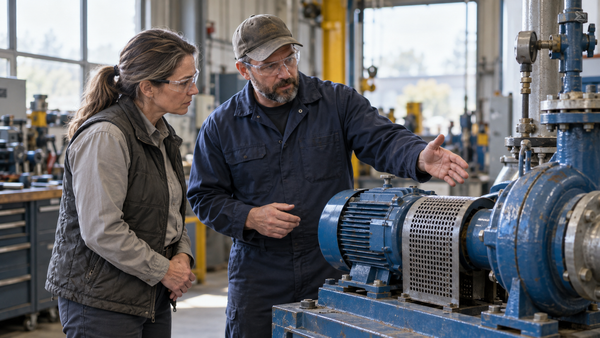
That foundation starts with understanding the work itself, not just what the procedure says should happen, but what is actually happening in the field. It starts with recognizing hazards before they become incidents. It starts with knowing policies, procedures, and standards well enough to see when the job is drifting. It starts with communication, real communication, asking questions, listening to concerns, and building enough trust that people tell you what is actually going on.
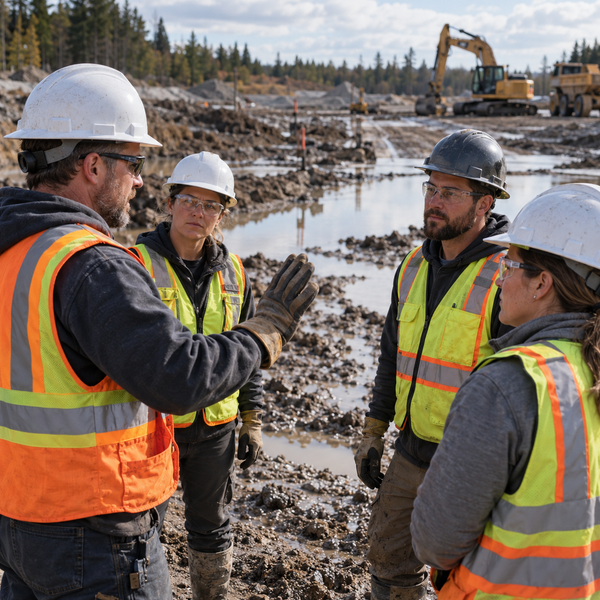
And it starts with getting out in the field.
I say it a lot because I believe it: EHS cannot be led from the office.
The real value of an EHS professional shows up where the work is being done. That is where you learn the task, the conditions, and the pressure people are working under. That is where you verify whether the standard on paper is the standard in practice. That is where you find out whether the foundation is real or whether it just looks good in a meeting.
The guidance around strong safety and health programs keeps pointing back to the same things. Leadership matters. Worker participation matters. Hazard identification matters. Risk assessment matters. Training matters. Communication matters. Follow-through matters. Continuous improvement matters.
That should tell us something.
The fundamentals are not beginner material that we outgrow once we have experience. They are the core of the job.
I have seen organizations want advanced results without strong fundamentals. They want a strong culture without consistent field presence. They want better risk recognition without teaching people how to actually see the hazard. They want stronger execution without making sure the workforce understands the standard and has the tools to follow it.
That is usually not how strong EHS work gets built.
You build it the same way great coaching gets built. You start with the basics. You repeat them. You sharpen them. You verify them. And you never get so advanced that you think the fundamentals no longer matter.
If the basics are strong, a lot of other things get better with them. If the basics are weak, the rest of the system usually starts cracking sooner or later.
That is why I think every EHS professional should stop once in a while and ask a simple question:
Are we still strong on the fundamentals?
Practical Takeaway
- Spend time understanding the real work, not just the written procedure.
- Get better at recognizing hazards and assessing risk before the job drifts.
- Know your policies, procedures, and standards well enough to spot weak execution early.
- Build enough trust with the workforce that people will tell you the truth.
- Get in the field and verify whether the standard on paper is the standard in practice.
PPE Spotlight
This week's PPE spotlight is the KEEN Utility Gibson Mid safety boot.
I like this one because it reinforces a practical point about PPE. Protection comes first. No debate there. But comfort, fit, and whether people are actually willing to wear something consistently matter too.
If people do not like wearing something, they will find reasons to avoid it, swap it out, or treat it like a nuisance. That is one reason footwear matters so much. People wear it all day. If the boot is uncomfortable, heavy, or awkward, the standard starts feeling like a burden instead of a basic expectation.
The bigger point is simple. Good PPE should protect people, but it should also be something they are willing to wear day after day. A PPE standard only works if people will follow it consistently in the real world.
Product link:
https://www.keenfootwear.com/products/mens-gibson-mid-belgian-gum
From The True North EHS
Why Training Completion Is Not Training Effectiveness
Training records matter, but they do not prove field behavior changed.
Ghost draft currently in progress with audio companion attached.
After the Incident, Don't Lose the Human While Following the Procedure
Timeliness matters, but so does the person sitting across from you after a serious event.
https://www.thetruenorthehs.com/after-the-incident-dont-lose-the-human-while-following-the-procedure/
The True North EHS, Issue #9
What supervisors tolerate often becomes the real field standard.
https://www.thetruenorthehs.com/the-true-north-ehs-issue-9-2/
Dad Joke of the Issue
I only know 25 letters of the alphabet.
I do not know y.
Strong EHS professionals do not outgrow the basics. They get better at seeing them, reinforcing them, and verifying them where the work is actually happening.
You're receiving this because you subscribed to The True North EHS. Practical safety insight for real-world operations.