Why Training Completion Is Not Training Effectiveness

Prefer to listen, here is the audio companion for this article.
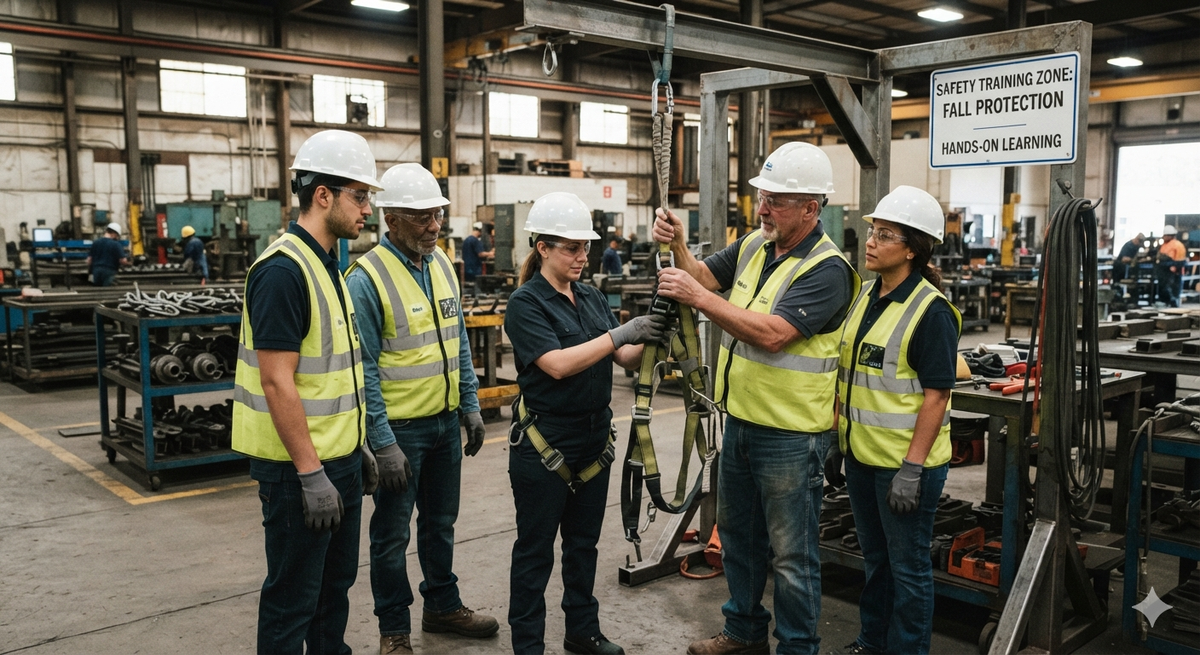
Years ago, I had the opportunity to attend a 40-hour train-the-trainer course in Red Wing, Minnesota through DBI-SALA for fall protection.
One of the things that stayed with me from that training was the discussion around the three learning styles: visual, auditory, and kinesthetic.
That point mattered to me then, and it still matters to me now, because in my experience a lot of adult learning leans heavily toward the kinesthetic side. Adults tend to learn better when they can see the task, touch the equipment, work through the process, ask questions, and actually do the thing they are being trained to do.
That is one reason I have never been fully convinced by training programs that rely too heavily on slides, sign-in sheets, and a quick knowledge check at the end.
Training completion matters, but training completion is not training effectiveness.
A roster can tell you who was present. It can tell you who signed the sheet, who completed the LMS module, and who sat through the class. What it cannot tell you is whether the training actually translated into better decisions, better execution, or different behavior once people went back to work.
That is the part that matters most.
Attendance is not the finish line
I have seen organizations put a lot of effort into training. The material gets built, the class gets scheduled, the slides get presented, the quiz gets passed, and the records get closed out. On paper, everything looks good.
Then you go out into the field a week later and the work still looks exactly the same, the same shortcuts, the same weak decisions, and the same drift from the standard.
If the field behavior does not change, then the training may have been completed, but it was not effective.
That does not always mean the instructor did a bad job. Sometimes the training was too generic. Sometimes the examples did not match the actual work. Sometimes supervisors never reinforced it afterward. And a lot of times, the training was never delivered in a way that people were likely to retain in the first place.
If adult workers learn best by doing, touching, practicing, and working through the task, then we should not be surprised when passive training does not hold up very well once the real job starts moving.
The real test happens after the classroom
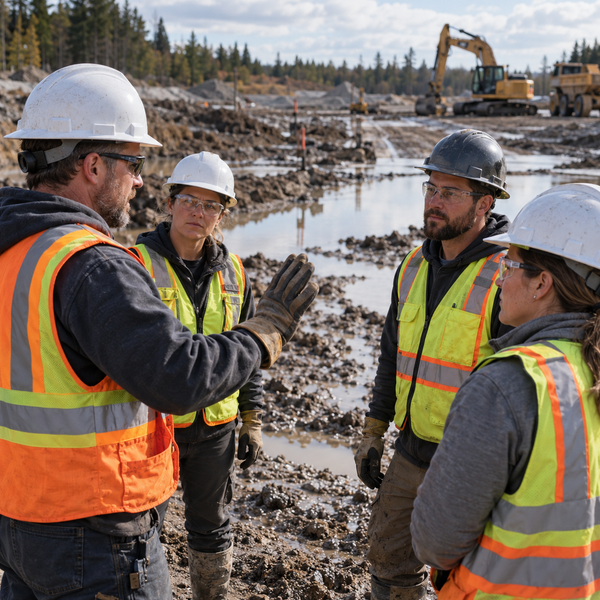
Training effectiveness does not get proven in the classroom, the conference room, or the online module. It gets proven in the field, after the meeting is over, after the LMS shows complete, and after the instructor is gone.
That is where you find out whether people can recognize the hazard, explain the control, apply the expectation, and hold the line when the work gets inconvenient.
I have seen people sit through a class, answer the questions correctly, and then go right back to doing the job the same risky way they were doing it before. When that happens, the organization should learn something important. Not about the worker, but about the gap between delivering information and changing behavior.
Good training changes behavior, not just records
The purpose of safety training is not to create a document trail. The purpose is to improve decisions and behavior around real work.
Good training should help people answer practical questions like: What is the hazard here? What does the standard require? What does good execution look like on this job? What should I do if conditions change? When should I stop and ask for help?
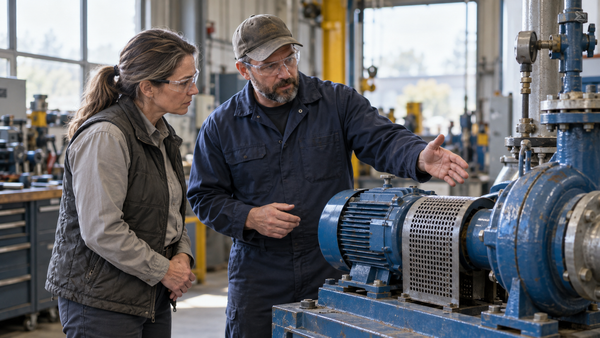
In my experience, people are far more likely to retain those answers when the training includes demonstration, discussion, hands-on practice, and realistic application instead of just information transfer.
If the training does not make those answers clearer, more usable, and more likely to show up in the field, then completion alone does not mean much.
One of the biggest gaps is follow-through
This is where I have seen a lot of organizations lose the value of their training investment. They deliver the message once, then never go see whether it showed up in the work. There is no observation, no coaching, no reinforcement, no crew-level discussion about what should look different now, and no real check to see whether the training landed.
That is how training turns into a paperwork event instead of a performance improvement tool.
If an organization is serious about training, then somebody should be watching the related task soon afterward and asking a very simple question: What changed?
Workers usually learn what matters from the job, not the slide deck
Even strong training can get erased quickly if the field environment teaches a different lesson.
If the class says one thing but the pace of the work rewards another, people notice. If the training says to stop when conditions change but the supervisor gets irritated when someone does exactly that, people notice. If the training says to use the control every time but nobody says anything when it gets skipped, people notice that too.
I have also seen situations where an employee goes through the training, gets the information they need to perform a task, and then gets out into the field only to hear from another employee, "I know that is how they taught you to do it, but this is how we actually do it out here."
That is an important moment.
When that happens, the organization has a gap it needs to pay attention to. Either the training is not aligned with the practical realities of the work, or the field has normalized behaviors that were never supposed to become the standard. Either way, that gap needs to be addressed.
That is part of the fine line between what gets trained and what gets practiced. Good leaders have to know whether the answer is to improve the training, correct the field behavior, or both.
That is why training effectiveness cannot be judged in isolation. In my experience, it has to be judged in the context of supervision, work planning, field conditions, and what the organization actually reinforces after the class is over.
A better way to think about training
Instead of asking only whether the training was completed, I think organizations should ask whether the training created evidence of improvement.
Are people executing the work better? Are there fewer repeat mistakes? Are workers asking better questions? Are controls being used more consistently? Are people reporting uncertainty or changing conditions earlier? Are crews making better decisions when the job starts drifting?
That is a much more honest measure. It is also a much more useful one, because training is only valuable if it shows up in performance.
The takeaway
Training completion matters. You still need the roster, the records, and the attendance. But if completion is the main success metric, the organization is aiming too low.
The real question is whether the training changed anything once people went back to work.
If it did, that is training effectiveness. If it did not, then the class may have been completed, but the risk is still sitting right where you left it.
And if we really want better training outcomes, then we should be honest about how adults learn. More of our safety training should include seeing, discussing, handling, practicing, and doing, not just listening and signing.
Practical Takeaway
- Stop treating attendance as proof that the hazard was addressed.
- Observe the related task soon after training and look for changed behavior.
- Use supervisors and field leaders to reinforce the training in real work.
- Make training examples match the conditions people actually face on the job.
- Measure effectiveness by what improves in the field, not just what closes in the system.
Bryan Barker is an EHS professional with experience across construction, mining, general industry, and environmental leadership. The True North EHS provides practical safety insight for real-world operations.