The Day I Learned Compliance Wasn't Enough

Prefer to listen? Here's the podcast-style audio companion for this article.
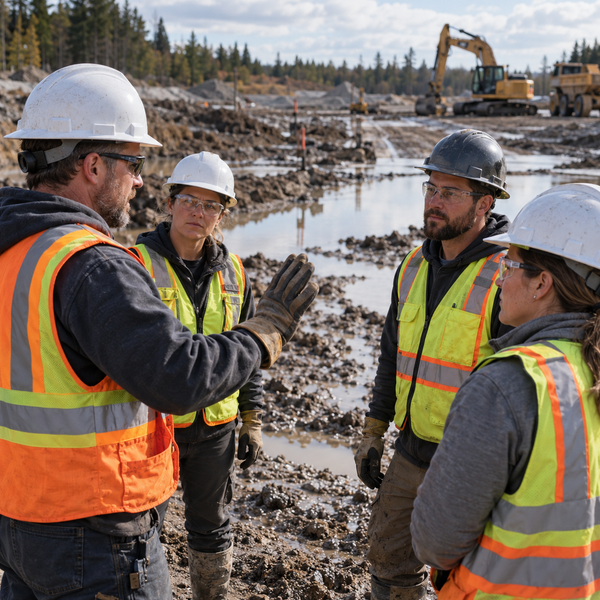
There are moments in this profession that stay with you forever. One of those moments for me happened when I was working in the mining industry in a processing area.
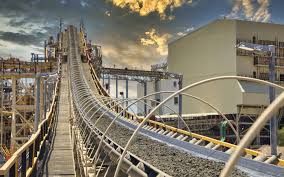
It was a Saturday, and a younger worker, probably around 20 years old, was in a tunnel near one of our conveyor systems. He was getting ready to take a sample, and like he was supposed to, he called the control room to let them know the conveyor would be shutting down in a few minutes.
While he was waiting for the belt to stop, he decided to do something productive. He grabbed a broom and started sweeping up around his work area.
As he was sweeping near the conveyor, the end of the broom got pulled in between the belt and the idlers. In an instant, it pulled him into the return rollers and the conveyor belt.
By pure luck, or maybe instinct, his body was able to hit the pull cord and stop the belt.
After he pulled himself out, he tried to radio for help. His microphone was clipped to his shoulder, but his hands were so badly injured he couldn't key the mic with his fingers. He keyed it with his chin and called out, "Mayday, mayday. I'm in the tunnel and I need help."
Emergency response was activated immediately.
Later that morning, I got the call that one of our process operators had been pulled into a conveyor and was on the way to the hospital. At that point, I had no idea what condition I was walking into.
When I got there, he was awake and in surprisingly good spirits. His hands were wrapped in heavy bandages, almost like boxing gloves. I stood there talking with him, still trying to process what he had just survived.
At one point, he asked if he could call his mom. I called her for him and held the phone up to his ear. He told her he was in the hospital and that he had been hurt at the mine site.
His mom was distraught. And after that call ended, the emotion of everything seemed to finally catch up with him. He started crying and said something to me I've never forgotten:
"It's amazing how your mom can make you cry in situations like this."
He went through multiple surgeries and still deals with issues with his hands to this day.
That incident changed me.
When we investigated what happened, we found that the pull cord was there, it was functional, and it was tested regularly. The area had guarding. On paper, the conveyor met the requirement. The area was considered safe.
But after the investigation, we added additional guarding around the conveyor system, and we put an interlock on it so if someone removed the guard, the conveyor would shut down.
That was the part that hit me hardest.
I had inspected that area before. I had looked at it and accepted it as safe because it met the minimum requirement. But minimum compliance did not prevent a young worker from getting pulled into a conveyor and permanently injuring his hands.
That moment forced me to confront something every safety professional needs to understand:
Just because something is compliant does not mean it is safe enough.
That lesson has stayed with me ever since.
Too often in safety, we look for whether something passes. Is the guard in place? Is the procedure written? Is the equipment tested? Is the box checked?
Those are important questions. But they are not the final question.
The final question is this: Is this truly the safest way this work can be done?
If the answer is no, then we're not done.
Looking back, I don't see that incident as a failure of paperwork. I see it as a failure to push beyond mediocre. We had a system that met the standard, but we had not gone far enough to create the safest environment possible.
That changed how I inspect. It changed how I investigate. It changed how I lead.
I no longer want to know only whether something meets the minimum requirement. I want to know what else can be done to better protect the worker. What additional barrier can be added? What hazard can be engineered out? What assumption have we accepted for too long just because nobody has been hurt yet?
Because sometimes the difference between "compliant" and "safe" is measured in surgeries, trauma, and a phone call to someone's mother from a hospital room.
I'll never forget that day. And I don't want to.
It reminded me that safety leadership is not about settling for what is acceptable. It's about constantly pushing for what is better.
That is a lesson I carry with me into every inspection, every conversation, and every decision I make as an EHS professional.
Bryan Barker is an EHS professional with experience across global construction, mining, general industry, global manufacturing, semiconductor, distribution, global retail, data centers, and energy. True North EHS provides practical safety insight for real-world operations.