Why Storytelling Still Matters in Safety

Prefer to listen? Here’s the audio companion for this article.
A few weeks ago, I had the opportunity to speak with fellow EHS professionals about something I believe is often overlooked in our field, the power of storytelling.
In safety, we spend a great deal of time focused on regulations, procedures, data, and compliance. All of those things matter. They are essential. But if we want people to truly connect with a message, to remember it, to internalize it, and ultimately to act on it, we have to do more than present information.
We have to make people feel something.
Storytelling has always been one of the most effective ways to do that. Long before written language, people used stories to pass down knowledge about the world around them, astronomical events, natural disasters, important figures, and lessons necessary for survival. Stories helped people remember. They helped people connect. In many ways, they still do.
That need is embedded in who we are.
During my presentation, I shared a quote from Maya Angelou that captures this truth perfectly: “People will forget what you said, people will forget what you did, but people will never forget how you made them feel.”
That idea applies directly to safety leadership.
People may not remember every policy you reviewed, every metric you shared, or every procedure you outlined. But they will remember the message that made them pause. They will remember the story that felt personal. They will remember the moment they saw themselves, or someone they love, in the lesson being shared.
That is why storytelling matters in EHS.
Be a Hero for Your Family
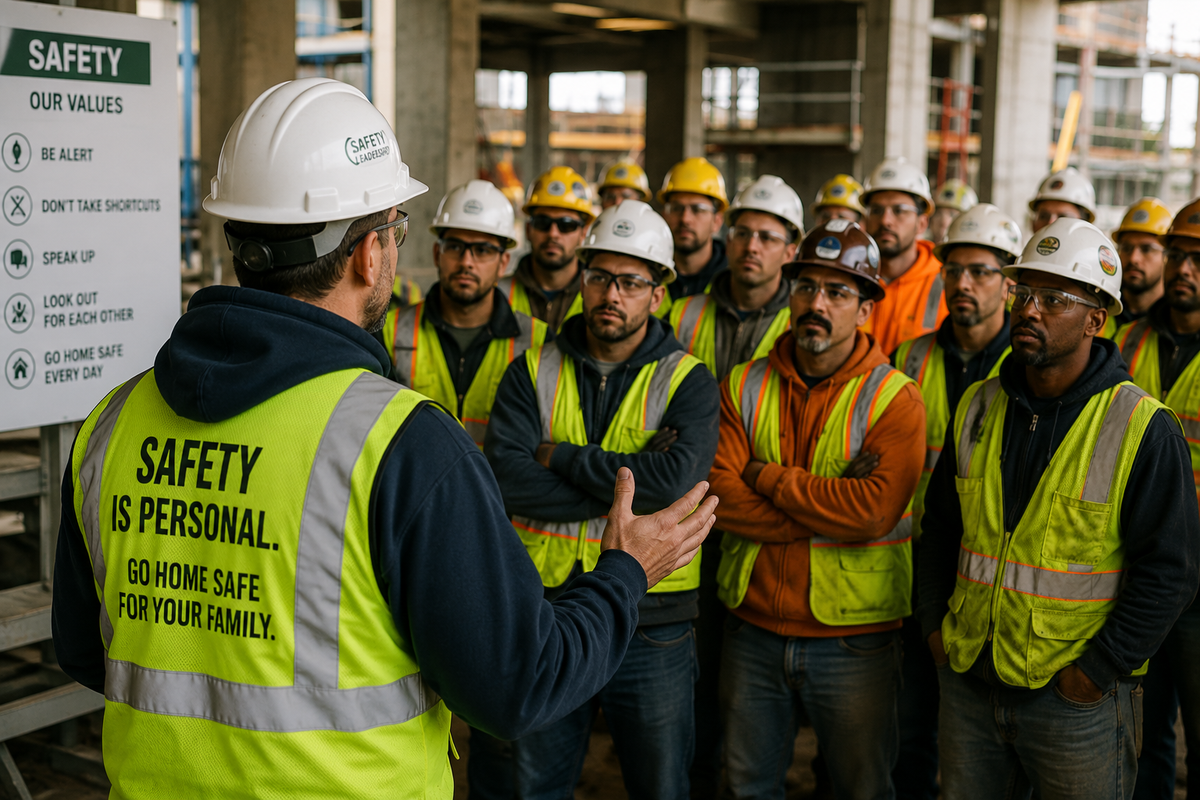
When I speak to frontline employees, I often share a simple message: don’t be a hero for the company, be a hero for your family.
If you are climbing a ladder, driving a vehicle, entering a hazardous environment, or performing any other high risk task, wear the proper PPE. Follow the process. Take the time to do the job correctly. Do not take shortcuts in the name of speed, convenience, or toughness.
Too often, people take risks because they want to prove something. They want to show they can get the job done quickly. They want to be seen as dependable, resilient, or willing to push through. In that moment, it can feel like they are being a hero for the company.
But if something goes wrong, if that shortcut leads to a life changing injury or a fatality, the truth becomes painfully clear.
The company will continue. The work will go on. Someone else will eventually be hired to drive the vehicle, climb the ladder, or perform the task.
But your family does not get a replacement.
If you are gone, there is no one who can step into your place at birthdays, weddings, holidays, or everyday family moments. There is no substitute for your presence. There will simply be an empty chair where you should have been.
That is why safety must be personal.
It cannot live only in policies and procedures. It has to live in the choices people make when no one is standing over them. It has to live in the understanding that getting home safely is not just about the company, it is about the people who love you and count on you.
The Role of Integrity
Storytelling is also one of the best ways to talk about another critical part of safety culture, integrity.
Integrity is doing the right thing even when no one is watching.
That sounds simple, but in practice, it is one of the hardest principles to live out consistently. It shows up in the small decisions, wearing PPE when it would be easier not to, reporting a near miss when no one else saw it, stopping work when something does not feel right, or speaking up when the safer choice is also the less convenient one.
One story I shared during my presentation illustrates this point.
A boy was asked to watch his neighbor’s rabbits while the neighbor was away on vacation. Every day, he went over to make sure they were fed and had water. One afternoon, he came home from school and found his dog holding one of the rabbits in its mouth. The rabbit was dirty, lifeless, and clearly dead.
Panicked, the boy ran next door and checked the cages. One was open.
Afraid of being blamed, he came up with a plan. He gave the rabbit a bath, blow dried its fur, cleaned it up as best he could, and placed it carefully back in the cage.
The next day, when the neighbor returned, the boy went over and nervously asked how the trip had been. The neighbor replied, “It was great, but the strangest thing happened. Two days before we left, one of our prized rabbits died. We buried it in the backyard, and when we got home, it was back in its cage.”
It is a humorous story, but it makes a serious point, avoiding the truth does not make a problem disappear.
In safety, integrity matters because trust matters. If we want strong safety cultures, we need people who will tell the truth, report what happened, and choose what is right even when it is uncomfortable. We need people who understand that accountability is not about punishment, it is about protecting one another.
Turning Information Into Impact
At its best, safety is not just a system of rules. It is a culture grounded in responsibility, honesty, and care for others. Storytelling helps bring those values to life.
It turns information into impact.
It reminds people that behind every policy is a person. Behind every procedure is a life. Behind every shortcut is a consequence. And behind every safe decision is the opportunity to return home to the people who matter most.
That is why storytelling still matters in safety.
Because when a message moves beyond instruction and becomes personal, it has the power to stay with someone long after the meeting ends. And if a story helps someone put on their PPE, secure the ladder, report the hazard, or make the safer choice, then that story has done more than communicate information.
It may have helped save a life.