We Plan for the Fall. Do We Teach People How to Stay On?
Safety planning often explains failure in detail. But do our teams have an equally clear picture of what must go right?

Prefer to listen? Here is the audio companion for this article.
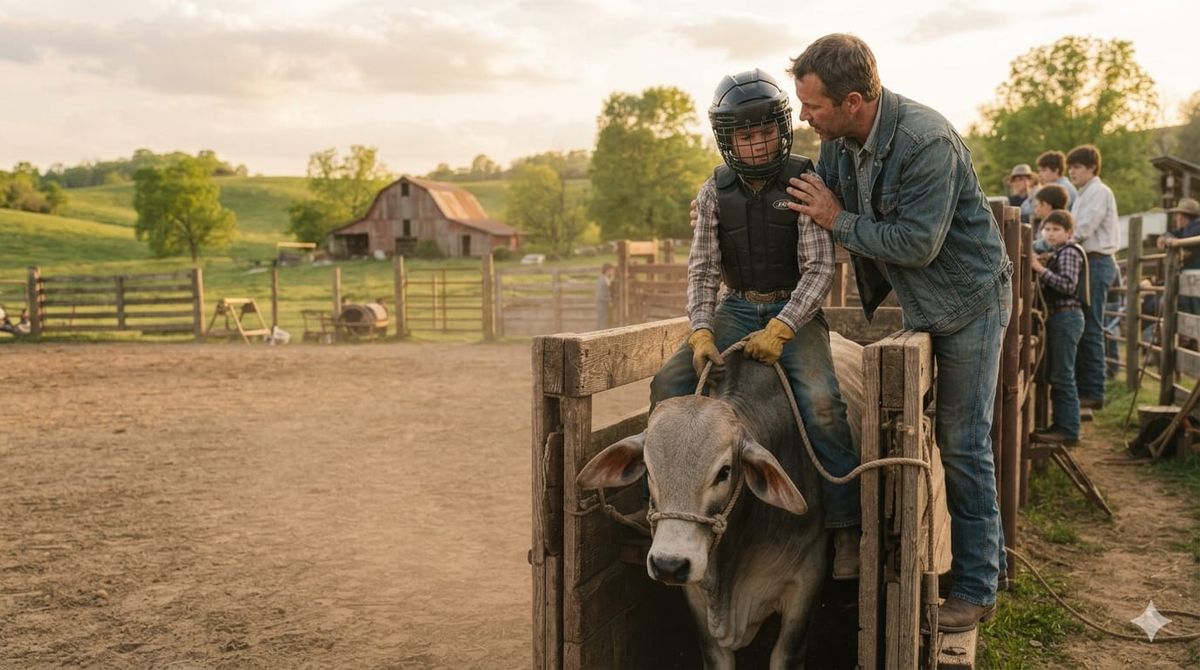
Years ago, while living in Kentucky, I had the opportunity to spend some time at a bull-riding school.
The riders were young, probably somewhere between 13 and 18 years old. They were there to learn how to ride. The bulls were learning too, gaining experience bucking, turning, and doing everything a bull does when the gate opens and a rider is on its back.
As one young rider prepared to get on a bull, I heard him look at his dad and ask a simple question:
“How do I fall off?”
His dad looked at him and said:
“Don’t worry about falling off. Worry about staying on.”
That answer has stayed with me.
The father was not saying that his son would never fall. He was not dismissing the risk or pretending the ground was not there. Everyone around that chute understood what could happen.
What he did was redirect his son’s attention.
The boy was already thinking about failure before the ride had even started. His dad brought him back to the task in front of him. Think about your position, your grip, and your balance. Think about what you need to do when that gate opens.
I have thought about that moment many times during my career in safety.
We Know How to Talk About What Can Go Wrong
Most safety conversations begin with hazards, and they should. We ask what could hurt someone, what energy is present, what could fail, and what the consequences might be. We talk about PPE, procedures, restricted areas, and emergency response.
Those are necessary conversations. But I have also seen teams spend so much time describing failure that they never build a clear picture of success.
I have sat through pre-job meetings where everyone could name the hazards, but people still walked away with different ideas about how the job would actually be performed.
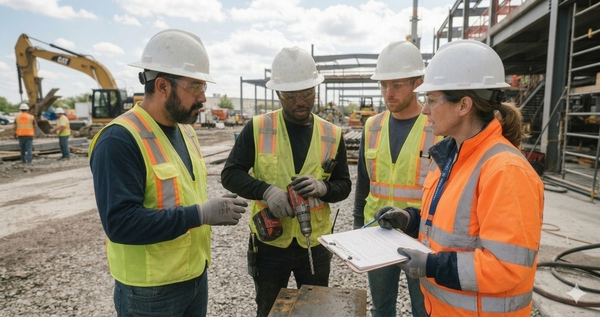
Take a crane lift. A team may identify the suspended load, unstable ground, pinch points, changing weather, and communication failure. The paperwork may be complete, and every hazard may have a check beside it.
But I still want to know what the lift should look like when it is done correctly.
Who is directing the movement? Where will everyone stand? What change will stop the lift?
Those questions are not separate from hazard recognition. They complete it.
Telling someone to stay out of the line of fire is important. Helping that person understand where to stand, what to watch, and how the safe position may change as the work moves makes the instruction usable.
That is the difference between warning people about the ground and teaching them how to stay on.
What Must Go Right?
Over time, I have started asking a second question during planning:
What must go right?
I am not looking for a long answer. I want the team to describe the few conditions that are essential for the work to succeed safely.
For that crane lift, the ground has to support the equipment. The rigging has to match the load. The exclusion zone has to remain controlled. The crew has to know exactly who is directing the lift, and communication has to work.
If one of those conditions changes, the work stops.
Now we have something people can picture. More importantly, we have something they can observe.
I have seen workers approach unfamiliar or high-risk work with their attention fixed on the consequence. They are thinking about the height, the equipment, the stored energy, or the possibility of making a mistake while everyone is watching.
Caution is valuable. It can cause someone to slow down or recognize that something is not right. But concern without direction can leave a person focused on the wrong thing.
That is where coaching matters.
I do not want to tell someone simply to be careful. I want to help that person focus on the next correct action. Where should you be positioned? What should you be watching? What condition means you stop?
The same principle applies to practice. The first time someone works through a difficult step should not be when the schedule is tight, the equipment is moving, and the entire crew is waiting.
If the task is unfamiliar or unforgiving, I want people to walk through it first. Practice the hand signals. Look at the setup. Talk through what happens if visibility changes or the work no longer matches the plan.
That kind of preparation often exposes problems that paperwork misses. A procedure may sound clear until someone tries to follow it. A planned body position may look fine on paper but make no sense beside the actual equipment. Two people may discover that each thought the other was directing the work.
I would rather find those gaps during a walkthrough than during the hardest part of the job.
We Still Plan for the Fall
The lesson I took from that father was never that we should ignore failure.
We still need engineered safeguards, fall protection, rescue plans, qualified workers, emergency response, and the discipline to stop when conditions change. Confidence is not a control. It will not overcome damaged equipment, fatigue, missing safeguards, or production pressure.
We have to prepare in both directions.
We plan for what could go wrong so people are protected if something fails. We define what must go right so people understand how to perform the work before that failure occurs.
Then we have to go into the field and see whether the plan survived contact with the real job.
Is the exclusion zone actually controlled? Are the critical conditions still in place? Does everyone know when to stop?
I have learned that a completed form cannot answer those questions. You have to go look.
I still picture that young rider waiting to climb onto the bull. Before the gate opened, he was already thinking about hitting the ground. His father did not deny that possibility. He simply brought the boy’s attention back to what he could do in that moment.
That is a lesson I continue to carry into my work.
I will always ask:
What could go wrong?
But before the job begins, I also want everyone to be able to answer:
What must go right?
We should plan for the fall.
We should also teach people how to stay on.
Bryan Barker is an EHS professional with experience across construction, mining, general industry, and environmental leadership. True North EHS provides practical safety insight for real-world operations.