The Job Changed. Who Decides It Can Continue?

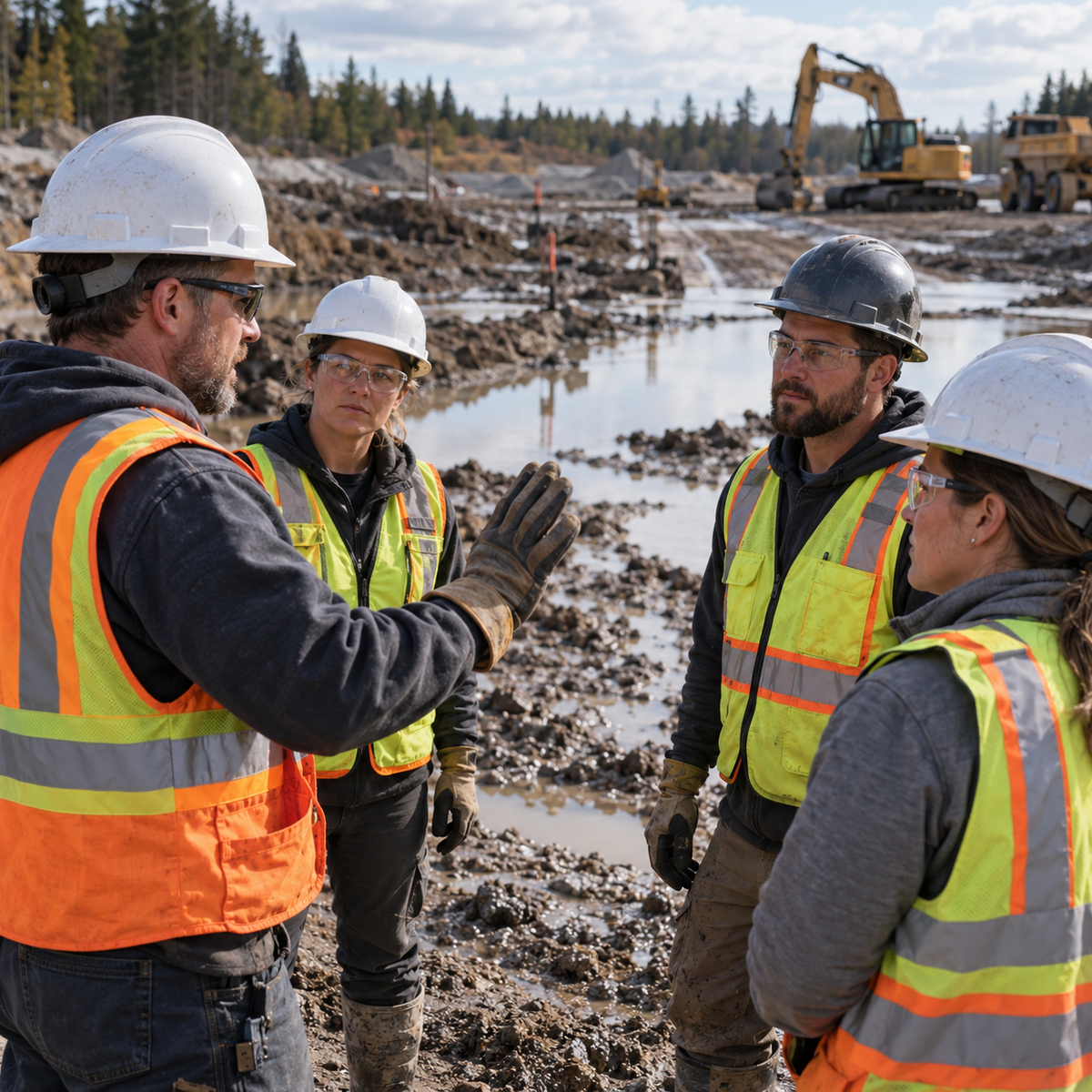
The morning briefing does not last all day just because the paperwork does.
At the start of the shift, the crew reviews the task, discusses the hazards, and confirms how the work will be done. The plan makes sense for the conditions in front of them.
But work rarely stands still.
Another contractor arrives. Materials get moved. Equipment needs access. By late morning, the task may be the same, but the conditions around it are not.
We tell people they have the authority to stop work if something is unsafe. But have we been equally clear about what happens next?
When the job changes, who decides it can continue, and what is that decision based on?
“This Isn’t What We Talked About”
Picture this hypothetical situation.
A crew starts the morning with a clear access route. Later, another contractor stages materials across it. Getting to the job now means passing through an area where mobile equipment is operating.
The tools are there. The work is underway. Nobody wants to lose the morning.
One employee looks at the changed route and says, “This isn’t what we talked about.”
No alarm. No incident. Just someone recognizing that the conditions no longer match the plan.
Someone might respond, “We’ll keep an eye out.” Someone else may point out that they have used that route before.
I understand the pressure to keep moving. People can be experienced, committed, and trying to help while still making a decision with incomplete information.
But wanting to finish does not resolve the equipment interaction. And the employee raising the concern may not have the authority to move the materials or coordinate another contractor’s work.
Raising the concern cannot also mean being left to solve it alone.
“Good Catch. Show Me What Changed.”
Imagine the supervisor’s first response is, “Why can’t you just use the other route?”
Now the employee has to defend the concern before anyone has looked at it.
A better starting point is simple:
“Good catch. Show me what changed.”
The supervisor looks at the blocked route and brings the right people into the discussion. The crew explains its access needs. The other contractor explains the nearby activities and equipment movements.
Now they can address the actual conditions.
Perhaps they can restore the original route. Perhaps they need a different arrangement that separates people from equipment. Whatever the solution, it needs to be verified and communicated before the affected work resumes.
A conversation between supervisors is not enough if the crew and equipment operator are still working from different expectations.
The schedule matters. But it cannot tell us whether the controls are adequate.
Make the Next Step Clear
When someone pauses a job, coworkers are waiting and someone is asking how long it will take. An unclear restart process adds pressure at exactly the wrong time.
People should know whom to contact, who needs to be involved, and who has the designated authority to authorize resumption under the applicable procedures. Some changes can be addressed within the crew’s authority. Others require additional coordination, expertise, or approvals.
We do not need every decision sent to the highest level. We need it made at the right level, with the right information.
At your next briefing, ask the crew, “What could change today that would make this plan no longer fit?”
Then discuss who they would involve and how everyone would know the revised arrangements were ready.
That conversation does more than prepare the crew. It shows that recognizing change is part of doing the job well.
The employee who speaks up is watching what happens next. So is everyone else. Our response helps determine whether they will raise the next concern or keep it to themselves.
When someone says, “This isn’t what we talked about,” I want us to hear a person doing their job well. Our responsibility as leaders is to listen, act, and make sure the crew has what it needs to move forward safely.