Build the Work Around the Worker
Design the work around your people. Practical lessons from distribution-center ergonomics, supplier collaboration, and leadership on the floor.

Prefer to listen? Here is the audio companion for this article.
We spend a lot of time teaching employees how to work safely. Lift correctly. Keep the load close. Avoid overreaching. Watch your posture.
Those instructions have a place. But sometimes we give them without asking whether the job actually allows people to follow them.
If an employee has to reach across a deep workstation all day, another reminder to avoid overreaching will not solve the problem. If heavier products are stored near the floor, a lifting demonstration does not change where the lift begins.
At some point, we have to stop asking people to compensate for the way we designed the work.
We should not be trying to build a person to fit the work environment. We should be building a work environment that fits our workers.
That became a practical focus for me while working in a distribution center.
Turn the Assessment Into a Change
I had the opportunity to build an EHS team equipped with ergonomic assessment tools to evaluate the work our employees performed. We used the NIOSH lifting calculator to help assess lifting risk, along with other tools and observations to understand the demands of the job.
The important part was not completing the assessment. It was using what we learned to improve the work.
In our single-pick areas, the team identified opportunities to place heavier products at mid-level and lighter products lower down. Instead of expecting employees to repeatedly retrieve heavier items from low positions, we changed where those products were stored.
It was a straightforward adjustment, but it addressed the task itself, not just the way we told someone to perform it.
Product weight was not the only consideration. We still needed to look at reach, frequency, package size, and how employees handled the items. Moving something to a different shelf does not automatically make every lift acceptable.
But we were asking a better question: Where should this product go to reduce the demand on the person picking it?
That is a different starting point from putting a product wherever it fits and expecting the employee to work around it.
Look Upstream, Too
Some of the best opportunities started before a shipment reached our building.
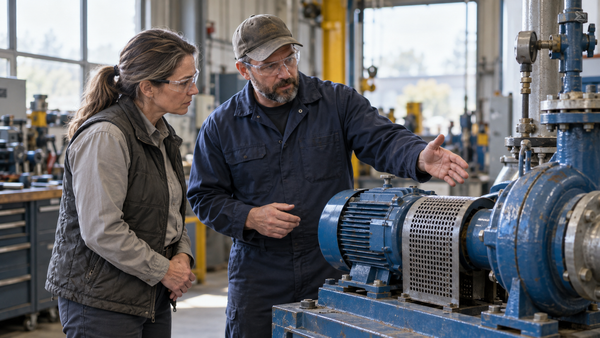
We worked with manufacturers supplying the distribution center to discuss pallet heights, weight limits, and ways to improve how products arrived and were handled.
Those conversations mattered. Decisions made at the shipping location could create difficult work at the receiving location. If we treated every incoming load as something we simply had to accept, we limited our ability to improve the job.
Working with suppliers gave us another way to address the demands before they reached our employees.
We also brought in shrink-wrapping equipment and order separators to help reduce the physical demands of the work. These improvements addressed different tasks, but the thinking was consistent: understand what the job requires, identify what can be changed, and reduce the burden on the worker.
We were not looking for one piece of equipment to solve everything. We were looking for practical improvements throughout the operation.
Make It Part of How Leaders Work
This was not an EHS-only effort.
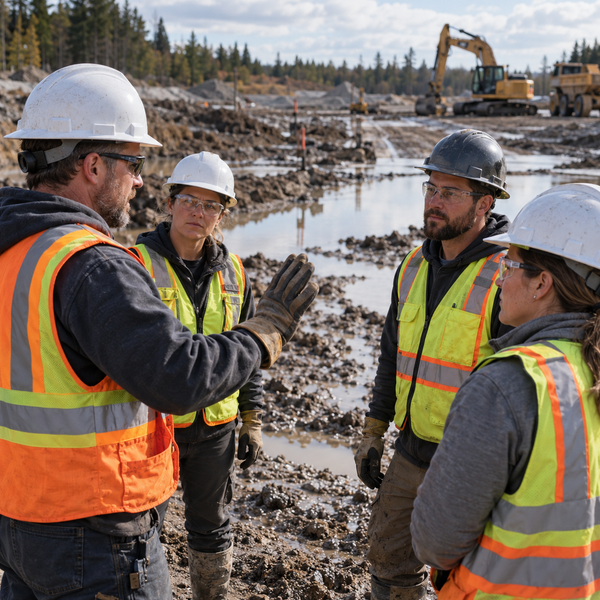
Managers and directors also went onto the floor to complete ergonomic assessments. They watched employees perform their jobs and used a form with straightforward questions to help identify opportunities for improvement.
On Fridays, our leadership team spent an hour together on the floor completing safety inspections, environmental reviews, and ergonomic evaluations.
That hour became a built-in part of how we operated. We were not waiting for an injury to give us a reason to look at the work.
It gave us time to observe, ask questions, and hear directly from employees. It also let us discuss what we were seeing together, rather than trying to understand everything later through a report.
For me, that was one of the biggest benefits. We strengthened our leadership team while improving our understanding of the work environment.
A form helped guide the evaluation, but the form was not the point. The value came from the conversations, the conditions we identified, and the changes that followed.
Measure Success in the Work, Not the Paperwork
What made me proud of that effort was the team’s ability to move from identifying a concern to doing something about it.
An ergonomic program should produce more than completed assessments and training records. Those are useful parts of the process, but the outcome we want is work that is better designed for the people performing it.
In our operation, we saw a reduction in repetitive-motion injuries as we made these improvements. That progress came from more than adjusting a workstation or moving a product to a different shelf. It came from the EHS team, employees, leaders, and suppliers working together to identify difficult tasks and improve how the work was done.
Training remained important. Employees still needed to understand the equipment and how to perform the work. But training was supporting the improvements, not being asked to substitute for them.
That is what I want leaders to consider.
Before we ask someone to lift differently, can we improve where the product is stored? Before we remind someone not to reach, can we bring the work closer? Before we accept an awkward shipment as normal, can we work with the supplier to change it?
The worker should not have to compensate for every weakness in the process.
Ergonomics gives us an opportunity to look beyond how someone performs a task and examine what we are asking them to do, repeatedly, throughout their workday.
The assessment is where we start. Improving the work is what makes it worthwhile.
Where in your operation are people still compensating for a work environment that could be designed better?
Tools That Improve the Work
NIOSH Lifting Calculator
We used the NIOSH lifting calculator as part of our ergonomic assessments. It helps evaluate lifting demands and identify opportunities to improve how the work is designed.
NIOSH’s official page includes guidance on the Revised NIOSH Lifting Equation and links to the NLE Calc app. It is intended for two-handed lifting tasks within the equation’s stated conditions, not every type of material handling.
Use the results to guide improvements, not simply to put a score on the task.
Explore the NIOSH Lifting Equation and Calculator
Product Spotlight: Mark-10 Pro Ergonomic Testing Kit
Our team used an ergonomic toolkit similar to the Mark-10 EKE-100-2 Pro Ergonomic Testing Kit to better understand the physical demands of the work.
This kit includes a force gauge and attachments for measuring forces involved in tasks such as pushing and pulling. Those measurements can help turn “this is difficult to move” into information a team can use to evaluate the task and compare conditions before and after an improvement.
It is an assessment tool, not PPE, and it serves a different purpose from the NIOSH lifting calculator. Force measurements need to be considered alongside posture, repetition, duration, and other task conditions; a reading alone does not establish that a task is safe.
The value is not just knowing the number. It is using that information to make the work better.
View the Mark-10 Ergonomic Testing Kit at MSI Viking
Dad Joke of the Week
My friend was showing me his tool shed and pointed to a ladder.
“That’s my stepladder,” he said. “I never knew my real ladder.”